Identification is everything with stinging insects. Yellowjackets in a wall void, bald-faced hornets in a maple, paper wasps over the door — each needs a different (and differently dangerous) removal. And honey bees? They get identified and referred for relocation, never exterminated.
This is the one pest category where the DIY attempt sends people to urgent care. The species determines the risk, the method, and whether removal is even the right outcome.

A honey bee swarm or colony gets identified and referred for relocation with a local beekeeper — they’re essential pollinators, and extermination is the wrong tool. Knowing the difference between a honey bee colony and a yellowjacket nest is step one, and we make that call correctly.
Yellowjackets nesting in a wall void will chew through drywall into your living room if the exterior entrance is plugged. It’s the most dangerous DIY mistake in this category — the colony doesn’t die, it redirects inward.
The gray football nests in trees and under eaves belong to bald-faced hornets — aggressive defenders that swarm at vibration. Knock-down attempts with a hose or broom are how multi-sting incidents happen.
Yellowjackets also nest in old rodent burrows in the lawn — invisible until the mower’s vibration triggers a defense. Late summer, when colonies peak at thousands, is when yard incidents spike.
Sheltered eaves, open ridge vents, wall gaps, and shed rafters attract next year’s queens too. Removal plus exclusion — screening vents, sealing voids — is what keeps the same spot from re-nesting.
Paper wasp, yellowjacket, bald-faced hornet, carpenter bee — or honey bee. The species sets the method, the timing, and the protective approach.
Confirmed honey bee colonies and swarms are referred for beekeeper relocation — pollinators leave alive.
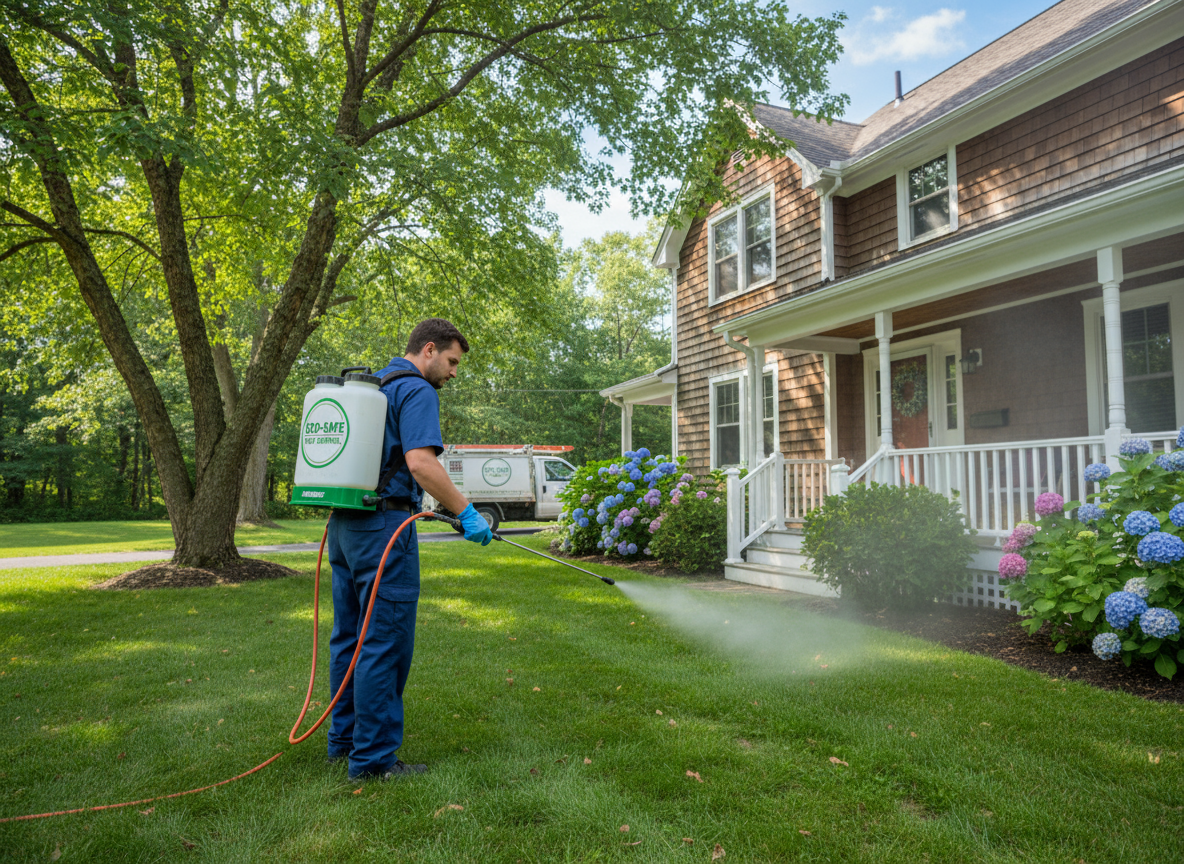
Proper equipment, correct timing (early morning/late evening when the colony is home), and full nest removal so stragglers don’t rebuild.
Wall-void and ground colonies are treated at the entrance without sealing — then closed only after the colony is confirmed dead.
Vents screened, gaps sealed, eaves and ridge protected — so next spring’s queens find the door closed.
Fast when it needs to be — wasp calls get priority scheduling in season.
The honey-bee-or-yellowjacket question changes everything — we answer it before anything else happens.
Honey bees are referred for relocation. Carpenter bees get wood protection, not carpet bombing.
Proper suits, timing, and technique — especially for hornets and void nests where DIY goes wrong.
Treated nests come down — abandoned combs invite rebuilds and secondary pests.
Ridge vents, wall gaps, and eaves get screened and sealed so the same spot doesn’t host next year.
Active nests near doors, decks, and play areas get moved to the front of the line.

One call puts a licensed local tech on it — treatment plus the seal-up that keeps them from coming back. Serving Upstate NY & Southwest VT.
Where stinging insects nest on a property — and how each one gets handled. Tap the pins.
Open umbrella combs under eaves, porch ceilings, and railings. Removed with proper timing — early morning or late evening when the colony is home — and the comb comes down so stragglers don’t rebuild.
Wasps entering a siding gap means a colony in the void. Plug that hole and they chew through drywall into the house — the most dangerous DIY move in pest control. We treat the void first, seal only when it’s confirmed dead.
Ridge vents, gable vents, and louvers are wasp doorways to the attic. Treatment plus screening — our RidgeGuard™ barrier keeps this route closed for good.
Yellowjackets colonize old rodent burrows in the lawn — invisible until vibration triggers a defense. Flag it, stop mowing there, and we treat the entrance at the colony’s home hours.
The gray football nests. Aggressive defenders that swarm at vibration — strictly a suited, professionally timed removal. Never the hose, never the broom.
Nests near doors, decks, and swing sets jump the queue — stinging insect calls in family zones get priority scheduling in season.

The species decides everything. Yellowjackets in a void, hornets in a maple, paper wasps over the door — each needs a different removal with different protective timing. And fuzzy golden-brown bees entering one gap steadily? That’s a honey bee colony, and it leaves alive with a beekeeper.
DIY knockdowns are how multi-sting incidents happen — colonies defend against vibration in force. Suited, properly timed removal takes the nest when the colony is home, takes it down completely, and screens the site so next spring’s queens find the door closed.
Nests near doors, decks, and play areas get priority. Describe it or send a photo — species ID often happens on the phone.
Species confirmed on site. Honey bees stop here: colony referred for beekeeper relocation, pollinators leave alive.
Early morning or late evening, when the colony is home. Suited, equipped, and done right the first time.
The nest physically comes down — abandoned combs invite rebuilds and secondary pests.
Vents screened, gaps sealed, eaves protected. The same corner doesn’t host next year’s queen.
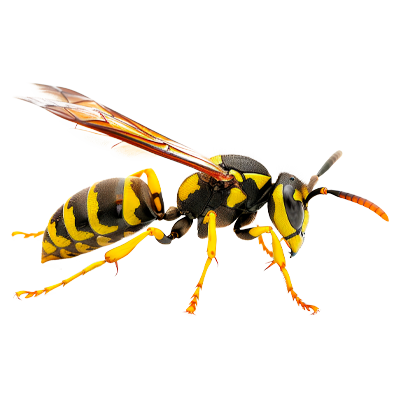
The shortcut: fuzzy and golden-brown, entering one gap steadily all day — likely honey bees, and we’ll refer relocation. Smooth, bright yellow-and-black, fast and agitated — yellowjackets or wasps, and that’s a treatment job. Send us a photo if you can get one safely; we’ll make the call.
Do not seal it. A blocked yellowjacket colony chews inward and can emerge through drywall into the house — it’s the most dangerous DIY move in pest control. The void gets treated first, then sealed once the colony is confirmed dead.
That’s a bald-faced hornet nest, and no — they defend against vibration in force, and hose/broom attempts cause multi-sting incidents. It’s a suited, properly timed removal. If it’s away from traffic, late fall frost also ends it naturally — we’ll advise which applies.
Classic ground-nesting yellowjackets, usually in an old rodent burrow — the mower’s vibration triggers the defense. Flag the area, stop mowing it, and have us locate and treat the entrance. Late summer colonies can number in the thousands.
Sheltered, warm nest sites recruit new queens every spring. The fix is exclusion after removal: screened vents, sealed gaps, protected eaves — our RidgeGuard™ ridge vent barrier exists for exactly this kind of repeat entry.
Eco Haven provides wasp, hornet, and bee-aware service across Upstate New York and Southwest Vermont — with priority response for active nests near family areas.
Still not sure what you’re dealing with? Real local people answer — no call centers. Same-day help on urgent pest or wildlife calls.
Nest near a door, deck, or swing set? Don’t wait on a form — call or text and we’ll prioritize it. Otherwise, tell us what you’re seeing and where.
Free inspections. Transparent pricing. Local team.
Roofline and yard pests overlap — these pages connect.
Ridge vent protection that keeps wasps, bats, and rodents out while the attic keeps breathing.
Learn moreSeason-long yard-zone treatment for Lyme country — edges, leaf litter, and shade, not blanket spraying.
Learn moreCarpenter-ant-aware ant control — colony elimination that follows the moisture, not just the trail.
Learn moreSpiders, centipedes, earwigs & more — exclusion-first control that closes the door behind them.
Learn moreReinforces the roofline transitions where wasps, bats, and squirrels find their way in.
Learn moreExplore every Eco Haven insect and pest service — targeted, eco-conscious, and prevention-first.
Learn more
Don’t seal it, don’t spray it from a ladder, don’t hose it. Call or text — stinging insect calls get priority, and honey bees get saved.