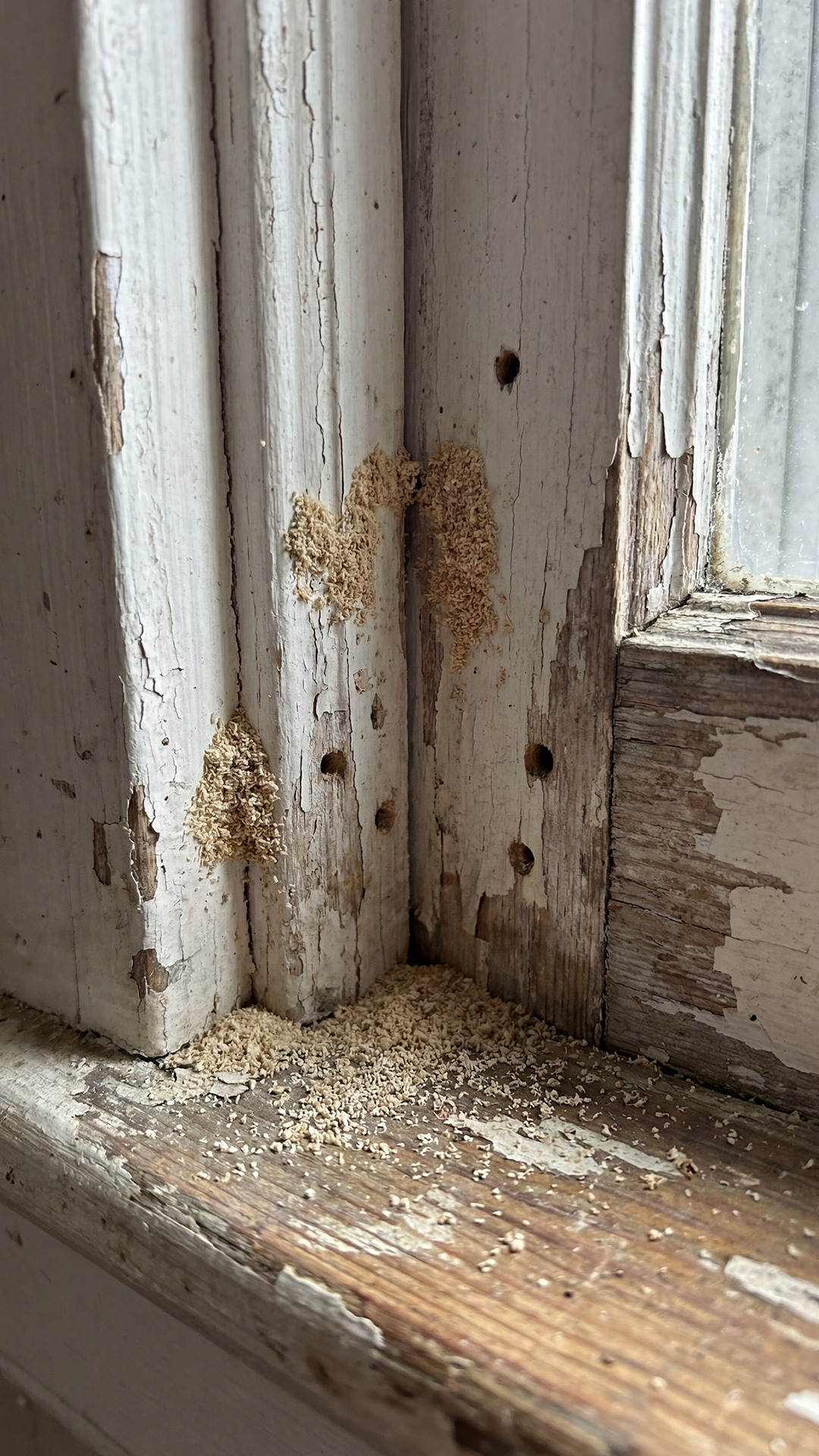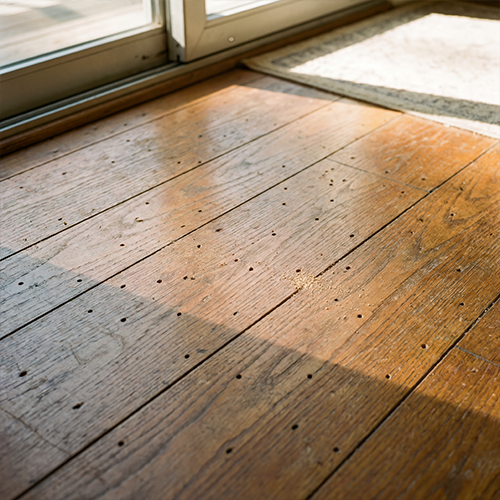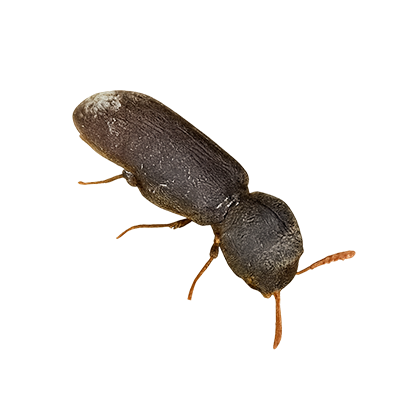
Powder post beetles work like a slow fire in your beams — larvae tunneling inside joists, log walls, and hardwood for years, announced only by pinholes and little piles of flour-like powder. In a region full of camps, barns, and log homes, they’re the wood pest Upstate can’t ignore.
By the time exit holes appear, larvae have been eating the wood’s interior for one to five years. The question is never “are there holes” — it’s “is it still active.”

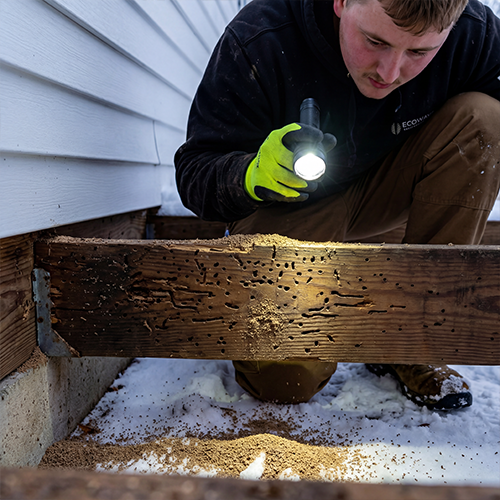
Those 1/16–1/8 inch pinholes are where adult beetles left after years of larval tunneling inside. Fresh, light-colored holes with fine powder (frass) sifting below mean the infestation is active right now.
Powder post beetle larvae need wood moisture — damp crawlspaces, unheated camps, and barns are ideal. Below about 13% wood moisture, most infestations can’t sustain themselves. Moisture control is half the treatment.
Seasonal buildings that sit closed and damp are perfect breeding cycles — adults emerge, mate, and re-lay into the same beams. Untreated, a camp’s floor system can lose structural capacity over a decade or two.
Infested firewood, barn-board décor, antique furniture, and salvage lumber are how beetles arrive in new buildings. That reclaimed mantel can seed your joists.
Every barn has beetle holes; the treatment question is activity. Fresh frass, light-rimmed holes, and monitoring tell us whether you need treatment or just reassurance — and we tell you honestly which it is.
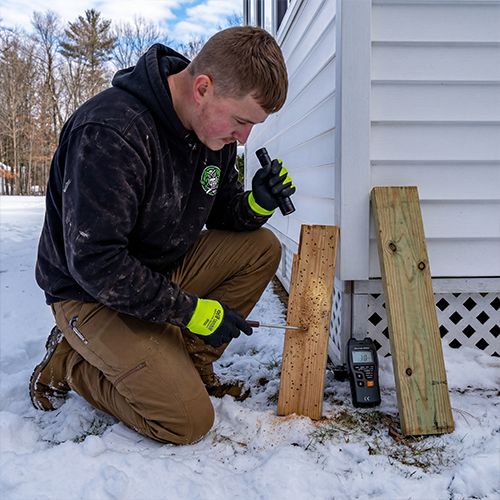
Fresh frass, hole appearance, species identification, and wood-moisture readings determine whether the infestation is active — or historical.
We find what’s keeping the wood damp — crawlspace conditions, ventilation, ground moisture — because dry wood ends the life cycle.
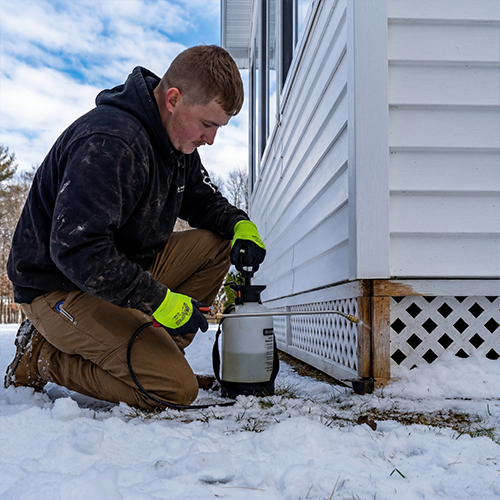
Borate-based treatments penetrate bare wood and kill larvae as they tunnel — protecting joists, beams, log courses, and subfloors long-term.
Crawlspace moisture control and ventilation corrections drop the wood below the moisture beetles need.
Marked holes and seasonal follow-up confirm no fresh exits — the proof the cycle is broken.
Camps, barns, log homes, and hardwood floors are our service area’s heritage — and this beetle’s favorite menu.
Old holes are everywhere; we test for activity and tell you straight if you don’t need treatment.
Penetrating treatments that keep protecting the timber for years — not surface sprays.
Drying the wood breaks the life cycle; treatment without moisture correction is half a job.
Seasonal buildings, log courses, and barn framing each get handled for what they are.
Damage findings are documented for your contractor or engineer when framing is affected.
Marked holes and follow-ups prove no new emergence — done means verified.

One call puts a licensed local tech on it — treatment plus the seal-up that keeps them from coming back. Serving Upstate NY & Southwest VT.
Where wood-boring beetles work on a property — and how we stop the slow fire. Tap the pins.
Damp crawlspaces and basements are the classic infestation: joists and sills soft enough for larvae to thrive. Fresh flour-like frass below pinholes means it’s active right now — borate treatment plus moisture correction, together.
Exposed rafters and ridge beams in older homes and camps carry decades of exit holes. We test for activity — hole condition, frass freshness — and tell you honestly whether it’s history or happening.
Powder post beetles in flooring announce themselves with pinholes and powder between boards. Treatment depends on finish and species — and stops the spread to the subfloor.
Deck framing and posts that stay damp feed the same cycle outdoors. Moisture readings tell us which wood is on the menu.
That barn-board table or antique dresser can carry an infestation into a clean house. New pinholes or powder under a piece? It gets isolated and assessed before beetles emerge and re-lay into your joists.
Firewood stacked inside, salvage lumber, reclaimed décor — the delivery routes. Simple storage rules keep the next generation outside.

Every barn and camp has beetle holes — the exits of generations past. What matters is fresh: light-rimmed holes, flour-like frass sifting below, damp wood readings. We test before we treat, and if it’s historic, we say so.
When it’s active, surface sprays are useless — the larvae are deep inside the timber. Borate treatments penetrate bare wood and kill larvae as they tunnel, while moisture correction drops the wood below what the next generation needs to survive.
Activity assessment: hole condition, frass freshness, species ID, and wood-moisture readings across the structure.
Borate application penetrates the bare timber — joists, beams, log courses, subfloor — and keeps protecting for years.
Moisture work: crawlspace correction, ventilation, ground-moisture fixes. Dry wood is the permanent half of the treatment.
Marked holes get watched. Larvae already deep inside may still exit — new holes outside the marks tell us where to follow up.
A full season with no fresh exits and dry readings. The slow fire is out.
Maybe — every older building has some beetle holes. Active infestations show fresh, light-colored holes and fine flour-like powder below them. We test activity with hole-marking and moisture readings, and we’ll tell you honestly if it’s historic.
Given years and damp wood, larvae can honeycomb joists and beams until they lose structural capacity — it’s a slow fire. Camps and barns that sit closed and damp are the classic cases. Caught early, treatment is straightforward and the wood is saved.
Usually one of three routes: they were in the wood when it was milled, they flew in and found damp timber, or they arrived in firewood, barn boards, or antique furniture. That reclaimed-wood mantel is a genuine suspect.
Drying below about 13% moisture stops the cycle long-term — but larvae already inside keep eating for years while it dries. Borate treatment kills the current generation; moisture control prevents the next. You want both.
Different pests, same address: damp structural wood. Carpenter ants excavate galleries (see our ant page); beetles pepper wood with pinholes and powder. An inspection distinguishes them — and moisture correction helps against all of them.
Eco Haven treats powder post beetles across Upstate New York and Southwest Vermont — camps, barns, log homes, farmhouses, and hardwood floors.
Still not sure what you’re dealing with? Real local people answer — no call centers. Same-day help on urgent pest or wildlife calls.
Buying a camp, opening one for the season, or seeing fresh powder under the beams? Tell us what you’re finding — activity testing settles it.
Wood, moisture, and crawlspace problems travel together — these pages connect.
Carpenter-ant-aware ant control — colony elimination that follows the moisture, not just the trail.
Learn moreSpiders, centipedes, earwigs & more — exclusion-first control that closes the door behind them.
Learn moreProfessional cleanup of contaminated insulation and crawlspace moisture issues.
Learn moreBait-driven roach elimination that removes the breeding colony instead of scattering it.
Learn moreExplore every Eco Haven insect and pest service — targeted, eco-conscious, and prevention-first.
Learn more
That powder is this year’s exit class — the larvae are still inside. Call or text for an activity assessment before the next generation re-lays.