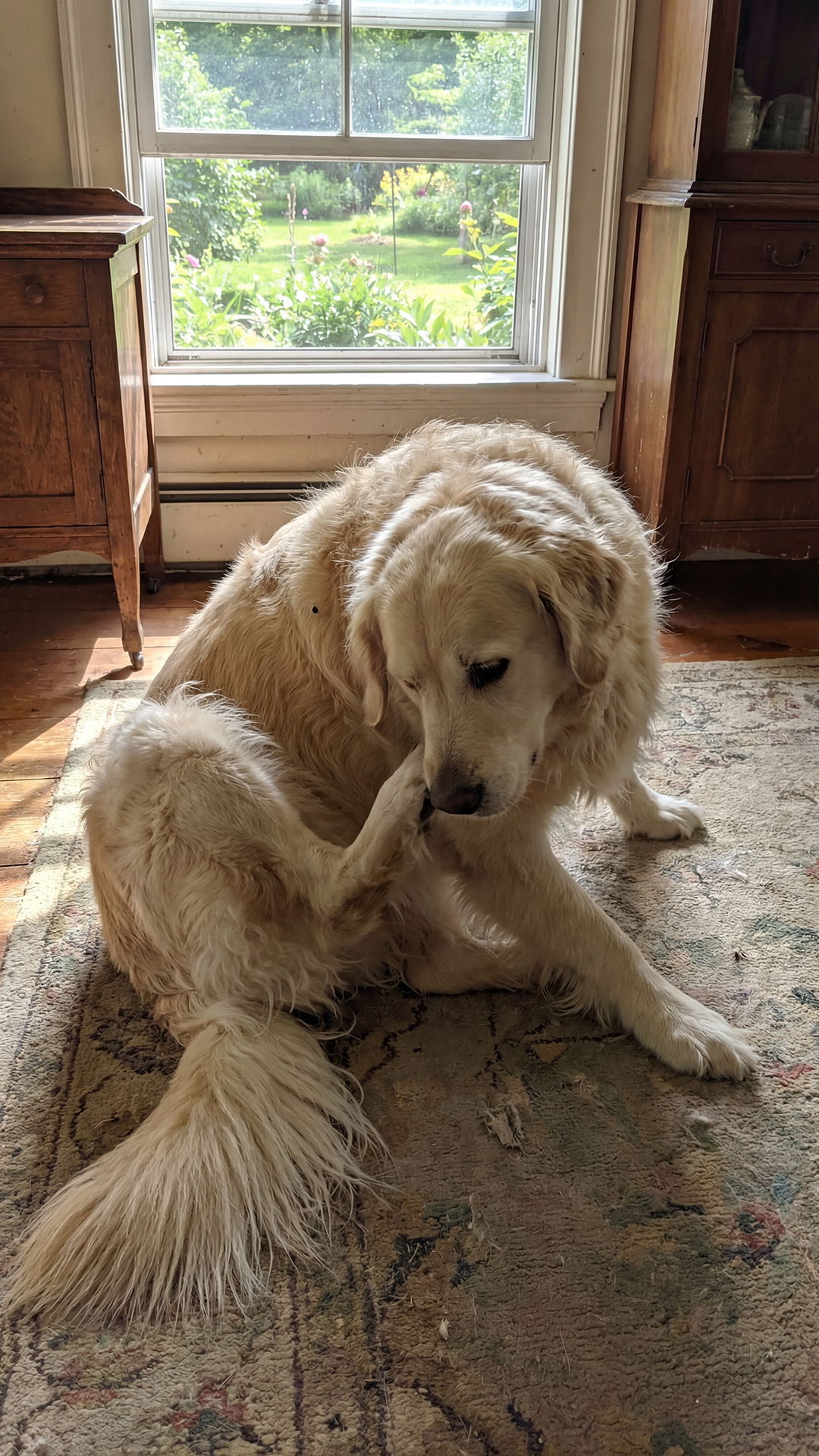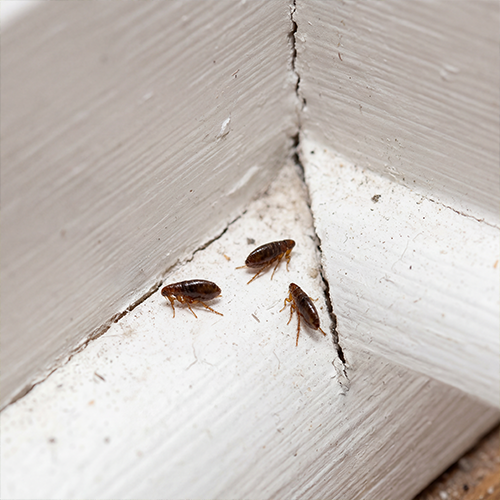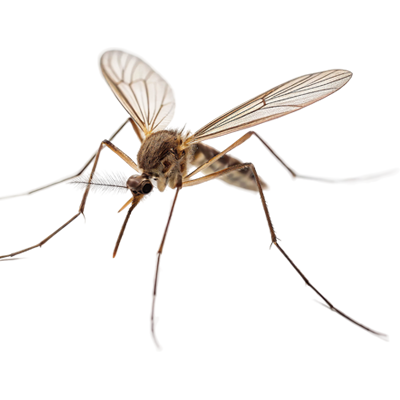
If you’ve treated the pet and you’re still getting bitten, you’ve met the flea life cycle: 95% of an infestation is eggs, larvae, and pupae living in your carpet — not on the animal. Eco Haven treats the home, the yard, and the source, timed around the pupal window that defeats one-shot treatments.
Flea control fails when it treats the adults and ignores the 95% of the population waiting in earlier life stages.

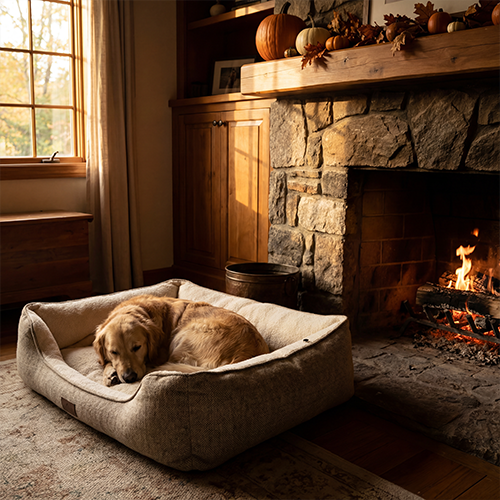
Adult fleas on the animal are the visible fraction. The eggs roll off wherever the pet rests, and the carpet, pet bedding, and couch cushions become the nursery — eggs, larvae, and pupae by the thousand.
Flea pupae are cocooned and nearly invulnerable to treatment. They hatch over days to weeks — triggered by your footsteps and warmth — which is why “the treatment didn’t work” two weeks later. It did; the pupae just hatched on schedule. The program has to outlast them.
Where did the fleas come from? Often the skunk, raccoon, or stray cat denning under your deck or porch — a wildlife host seeding the yard your pet plays in. Treat the house without evicting the source and the cycle restarts.
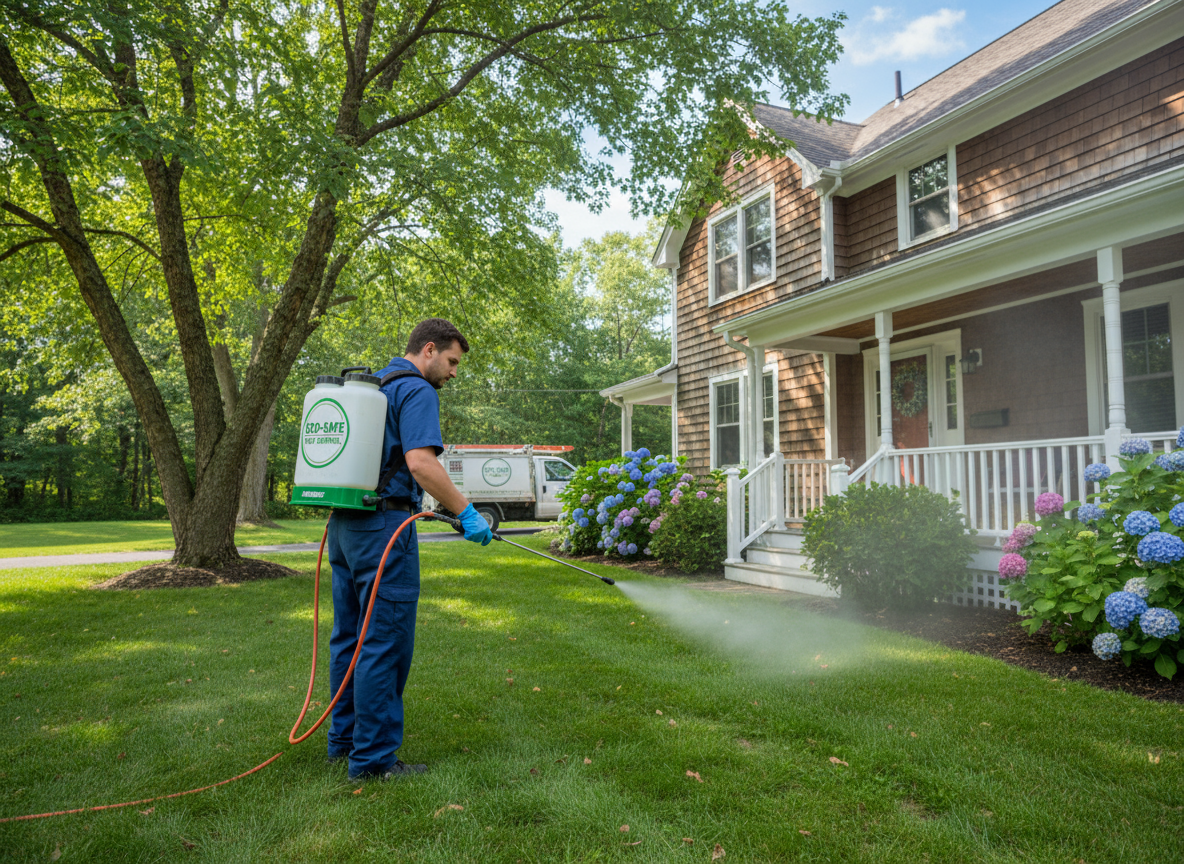
Fleas wait in shaded, moist zones — under decks, along foundation plantings, in tall grass edges — exactly where pets patrol. Yard treatment targets those zones, not the whole lawn.
It sounds too simple, but aggressive vacuuming pops pupae out of cocoons into contact with treatment and physically removes eggs. Our prep list makes your vacuum part of the program.
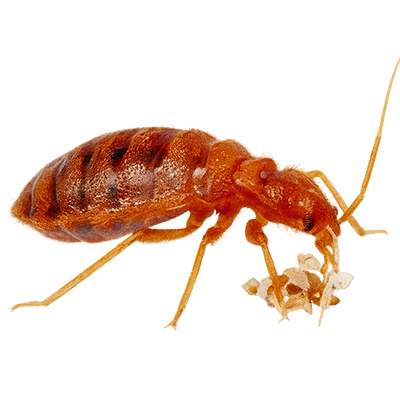
We confirm fleas (vs. bed bugs — the bites get confused), find the hot zones indoors, and check for the wildlife host under decks and porches.
Your vet handles the pet; we handle everything else — and the timing is coordinated so the treatments reinforce each other.
Carpets, pet zones, and cracks get adulticide plus insect growth regulator — killing adults and sterilizing the stages the vacuum misses.
Shaded, moist flea zones — deck perimeters, plantings, grass edges — are treated where pets actually pick fleas up.
Follow-up through the pupal window with monitoring — the program is done when hatching stops, not when the first visit ends.
Every failed flea job we inherit skipped a life stage, a zone, or the source. We skip nothing.
IGRs sterilize eggs and larvae — the 95% of the population adulticides never touch.
Follow-ups timed to the hatch cycle, so “it came back” never happens — it just finishes.
The skunk or raccoon under the deck seeded the yard — we find it and can evict and exclude it.
Shade, moisture, and pet paths get treated — not a blanket spray across your whole lawn.
Clear re-entry timing and vet coordination — the program protects the family it’s for.
White-sock checks and monitoring confirm the hatch has stopped before we close the program.

One call puts a licensed local tech on it — treatment plus the seal-up that keeps them from coming back. Serving Upstate NY & Southwest VT.
A flea infestation lives in three places at once — the home, the yard, and the source. Tap the pins.
Wherever the pet sleeps, eggs rain off into carpet and cushions — 95% of the infestation is here as eggs, larvae, and pupae, not on the animal. Adulticide plus growth regulator treats the stages you can’t see.
Flea larvae burrow into carpet base and rug edges, then cocoon. Bedroom treatment plus an aggressive vacuum protocol — your vacuum pops pupae out of their treatment-proof cocoons.
Pet bedding, throws, and washable rugs cycle through hot wash and dryer — every egg and larva in the fabric, gone in one load.
The skunk, raccoon, or stray cat denning under the deck seeded your yard in the first place. We inspect for the host — and can evict and exclude it, or the cycle restarts every season.
Flea larvae can’t survive sun. Foundation plantings, deck perimeters, and moist shade are where they develop — targeted zone treatment, not blanket lawn spraying.
The shaded margins where the pet patrols connect the yard zones. Treating the route breaks the reinfestation loop between outside and in.
Flea pupae are cocooned and nearly untouchable — they hatch over days to weeks, triggered by your footsteps. That’s why one-shot treatments “fail” on schedule: the spray worked, and the pupae hatched right behind it.
Our program is built to outlast the window: adulticide for what’s hatched, growth regulator to sterilize what hasn’t, yard zones for what’s developing outside, vet coordination for the pet — and the wildlife source handled so the yard doesn’t get reseeded.
Confirm fleas (vs. bed bugs — the bites get confused), treat home hot zones and yard shade zones, sync with the vet.
New fleas keep appearing — and that’s expected. Pupae are hatching into treated carpet. Daily vacuuming speeds the hatch into the treatment.
Hatch rate falls off as the window empties. Growth regulator keeps every new egg from becoming a next generation.
Hot zones re-treated as needed; the under-deck host situation gets resolved if one turned up.
The white-sock test comes back clean, the pet stays clean — the cycle is broken on all three fronts.
Because the dog carried about 5% of the population. The other 95% — eggs, larvae, and cocooned pupae — is in the carpet and pet zones, hatching on its own schedule for weeks. The home and yard need their own treatment, timed past the pupal window.
Probably not — you’re seeing the pupal window. Cocooned pupae shrug off treatment and hatch days to weeks later. A proper program plans for this with growth regulators and scheduled follow-up; a one-shot spray just meets the next generation.
A wildlife host — commonly a skunk, raccoon, or stray cat denning under the deck or porch, seeding the yard and hitching in on clothing. We inspect for the host, and our skunk eviction and exclusion service can remove the source for good.
Flea bites cluster at ankles and lower legs (they jump from the floor); bed bug bites appear where you sleep, often in rows. The distinction changes everything about treatment, so we confirm with evidence before treating either.
No — fleas can’t survive sunny, dry lawn. We treat the shaded, moist zones where they actually develop: deck perimeters, foundation plantings, and the grass edges on your pet’s patrol routes.
Eco Haven provides whole-cycle flea treatment across Upstate New York and Southwest Vermont — homes, camps, and rentals.
Still not sure what you’re dealing with? Real local people answer — no call centers. Same-day help on urgent pest or wildlife calls.
Every week adds thousands of eggs to the carpet. Tell us about the pets, the bites, and the deck — we’ll find the whole cycle and end it.
Free inspections. Transparent pricing. Local team.
Bites and yard pests overlap — and fleas often trace back to wildlife. These pages connect.
The skunk denning under the deck is often where the flea problem started — evict and exclude it.
Learn moreSeason-long yard-zone treatment for Lyme country — edges, leaf litter, and shade, not blanket spraying.
Learn moreDetection-first bed bug service — confirm, treat, and verify, without panic or fogger mistakes.
Learn moreThe below-grade barrier that keeps flea-carrying wildlife from denning under your deck again.
Learn moreExplore every Eco Haven insect and pest service — targeted, eco-conscious, and prevention-first.
Learn moreThat’s the other 95% of the infestation talking. Call or text for a free inspection — home, yard, and the critter under the deck, all in one program.